

Young Saviours Academy: Building Minds, Discipline, and Purpose One Child at a Time
- Brother Levon X

- Feb 2
- 5 min read

An interview with Brother James Muhammad
What’s been happening at Young Saviours Academy lately?

According to Brother James Muhammad, the answer is simple: growth, consistency, and impact. “We’ve definitely been growing,” Brother James shared. “We’re up to a consistent 16 to 17 students, and we’ve entered several competitions—everything from drill competitions to national STEM challenges.”
One of the most notable recent experiences for the students was their participation in the Future City competition, a nationwide STEM-based program that challenges students to design cities around real-world problems. Although a snowstorm prevented the in-person competition, the Academy still submitted its project, and the students were later informed that they placed in at least one category—another blessing in the journey.
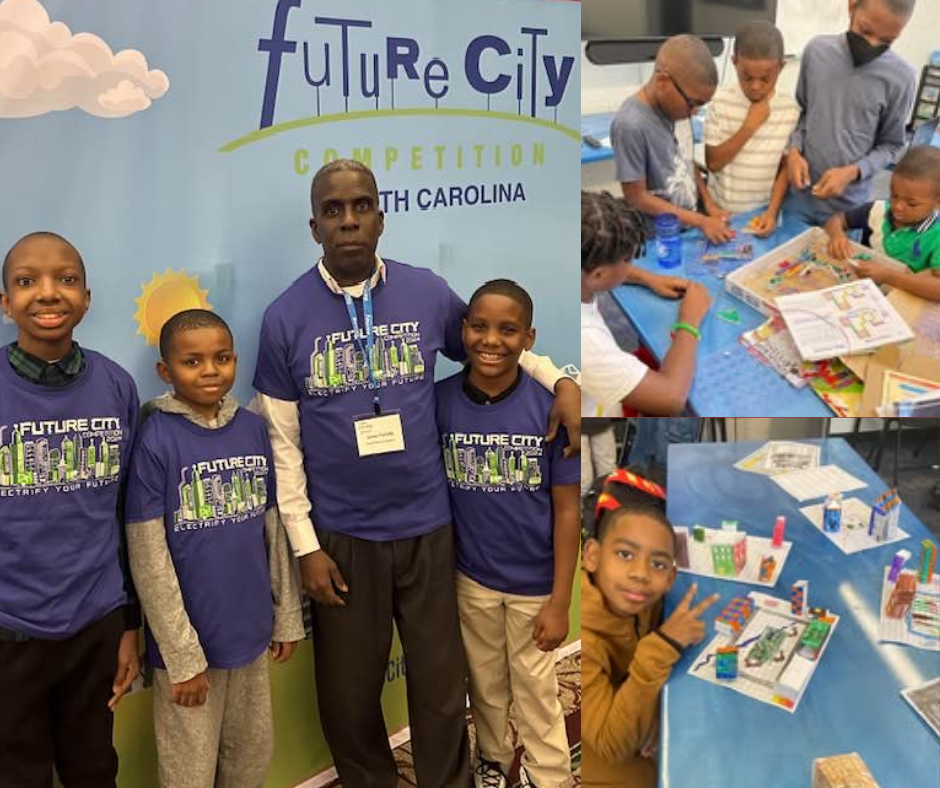
This year’s Future City theme focused on farm-to-table systems and eliminating waste, and the students approached it with both creativity and depth. They designed a futuristic city based in Africa, carefully thinking through how food travels from farms to households. Their concept addressed how cities discard unused food, how produce often rots in fields when it cannot be sold, and how those systems could be redesigned to serve people more efficiently.

Their city design emphasized keeping farms closer to urban areas to reduce transportation emissions, creating recyclable packaging to carry food products, and ensuring that access to food remained affordable for everyone. The students also explored innovative transportation systems using electronic magnetic fields to move food from distant farmland into the city efficiently.
Perhaps most impressive was their exploration of environmental science, where they incorporated research on enzymes derived from wax worms—enzymes capable of breaking down plastic. By focusing on the enzymes rather than the organisms themselves, the students imagined a way to reduce plastic waste in landfills and oceans through scientific innovation. “That’s STEM in action,” Brother James explained. “Science, technology, engineering, and math are embedded in everything we do.”
While the projects are impressive, Brother James is clear about what truly draws families to the program. The real attraction, he says, is not the competitions or accolades, but the care and consistency the children experience.
“Truthfully, the attraction isn’t just the programs—it’s that we care,” he said. “Consistency, showing up, and being present as a male role model makes a difference.”
Many of the children in the Academy come from single-parent households, often led by mothers. Brother James sees his role as extending beyond instruction or mentorship. “I tell them I’m their uncle,” he said. “I take care of them. Men deal with boys differently—not harshly, but firmly, with love and structure.”

He emphasizes that discipline is not about punishment, but guidance. It is about teaching young men how to listen, think, and act with purpose. One of the Academy’s most misunderstood tools is drill training, which Brother James uses as a teaching method rather than a militaristic exercise. “Drill teaches you how to hear and obey—but also how to think,” he explained. “There’s a preparatory command and an execution command. Before you move, you prepare yourself. That’s life.”
Unlike traditional military drills, students are taught to look before they move. This reinforces independent thinking rather than blind obedience. The children are trained to listen to authority while also assessing their environment and making wise decisions. “It’s a thinking army,” Brother James said. “We train them to listen to authority, but also to assess danger and make wise decisions.”
This approach has proven especially powerful for students labeled as autistic, ADHD, or ADD. Brother James challenges common assumptions by helping children recognize their ability to focus and discipline their minds. “If a child can focus on a video game for two hours,” he tells them, “you can focus here too. We’re just training your mind differently.”
Beyond discipline and STEM, the Academy integrates self-knowledge into learning, often blending science with deeper reflection. Brother James describes lessons where scientific facts become gateways to confidence and identity. “We talk about carbon,” he shared. “Six protons, six neutrons, six electrons. Carbon is black. Everything is made of carbon.”
From there, discussions expand into astronomy, dark matter, and the nature of creation—always circling back to self-worth, confidence, and understanding one’s place in the universe. When students are able to explain these concepts scientifically in their own words, he says, their confidence visibly grows.

Young Saviours Academy also prepares students for real-life situations through Community Emergency Response Training. The children learn how to perform CPR and first aid, how to stop bleeding, and how to use a tourniquet if necessary. They are taught how to assemble age-appropriate emergency “go bags” with essentials such as water, snacks, clothing, and basic medical supplies.
Beyond that, they learn practical life skills—how to prepare simple meals, how to communicate during emergencies, who to call, and where to go if they cannot return home. “We teach them to think,” Brother James said. “What would you need if you couldn’t get home? Who do you call? Where do you go?”
The feedback from parents has been overwhelmingly positive. Many have expressed shock at how their children have changed in such a short time. “Children who wouldn’t speak at first are now talking,” Brother James said. “They’re answering questions in school, carrying themselves differently, and showing confidence.”
The Academy is now preparing to engage directly with local schools to reinforce consistency across environments. “Discipline doesn’t stop at the door,” he explained. “And discipline doesn’t mean we don’t love them—it means we do.”
Despite the program’s impact, the cost remains intentionally low. Families are asked for just twenty-five dollars a month, and no child is turned away if a family cannot afford it.

“It’s not about money,” Brother James emphasized. “Anywhere else, parents would be paying hundreds. We’re here to serve.” The Academy also runs a podcast, YouTube channel, and radio program, giving the youth a platform to lead conversations themselves. Their radio show airs on WDRB Media Internet Radio, where students host discussions on real issues affecting their lives and relationships.
One recent episode focused on gossip and “slack talk,” with two students openly discussing how it temporarily damaged their friendship and how they resolved it on their own. They developed rules, structured the conversation, and led the discussion independently.
“They wrote the whole program themselves,” Brother James said proudly. “That’s growth.”
Families interested in enrolling their children or supporting the program can reach out directly by emailing youngsaviourscharlotte@gmail.com or calling 704-369-1295. Brother James asks callers to leave a message if there is no answer, assuring them that all messages are returned.

Young Saviors Academy stands as a powerful example of what happens when discipline, love, science, and self-knowledge come together. It is not just a program—it is a village, rebuilding confidence, structure, and purpose in the next generation.


Comments