

No More Glass Ceilings: The Transformation of Brother Keith Mitchell (9X)
- Brother Levon X

- 1 day ago
- 7 min read

BLXCR Editorial Note: We never get tired of witnessing what discipline, truth, and purpose can do to a man’s life. We’ve watched—generation after generation—how Islam has shaped men who were once scattered into men who become centered; men who were once reckless into men who become responsible; men who once lived without vision into men who learn to build, provide, and protect.
We want to thank the Nation of Islam for being a vessel of transformation for so many years—turning pain into purpose and mistakes into mastery. The story you’re about to read is heart-compelled, because it reflects a reality too many overlook: when a man receives guidance, and decides to submit to a higher law, he can become a blessing to his family, his community, and his future.
This is our conversation with Brother Keith Mitchell—also known as Brother Keith 9X.
“Before Time Is On Time”: The Transformation of Brother Keith 9X
By BLXCR
When Brother Keith 9X speaks, you can hear the balance: calm, reflective, grounded. He doesn’t present his life as perfect—he presents it as proof. Proof that a man can change. Proof that discipline is learnable. Proof that God can take a man from one path and redirect him into another—if the man is willing to submit.
In this interview, Brother Keith takes us back—before the name, before the Nation, before the “9X”—to the foundation of his upbringing, the lessons of manhood he received early, and the turning points that shaped the life he lives today.
A Childhood in Northwest D.C. and the Power of a Good Example

Brother Keith grew up in Northwest Washington, D.C., raised by his mother, alongside his brother, in a home that wasn’t “traditional” on paper—but still contained something many young men never get: a present male figure who tried to do right.
He shared that the man who helped raise him had flaws and weaknesses—like many men do—but still modeled something powerful: work ethic, structure, and a desire to keep his household away from negativity.
“He was a bricklayer,” Brother Keith told us—an occupation that speaks for itself. Bricklaying is not light work. It’s labor that demands consistency, stamina, and pride in craftsmanship. Brother Keith says those values rubbed off on him early: work hard, earn honestly, and stay away from foolishness—even if foolishness is all around you.
And like many D.C. youth, he remembers a time when outside was still outside: football in the street, basketball at nearby schools, Boys and Girls Club activities, and being home before the street lights came on. He spoke of the pride he gained from D.C.’s summer youth programs—jobs that allowed young people to buy their school clothes, build confidence, and learn responsibility.
In his words, it wasn’t all negative growing up in the city. There was joy. There was community. There were outlets—like go-go culture—that gave young people a release without having to self-destruct.
Incarceration, a Mind Shift, and “A Blessing in Disguise”
Then came the turning point.
Brother Keith shared that he was incarcerated in 1991 and returned home in 2000. He doesn’t glamorize that time. But he doesn’t waste it either—because he sees it for what it became: a doorway to a complete transformation.
“It was a blessing in disguise,” he said plainly. “I couldn’t see it at the time… but I don’t think I would have accepted the teachings while I was in the streets.”
That statement is heavy—because it’s honest. He explained that the fast life, the fast money, and the mental state that comes with street living can make a man deaf to guidance. But when a man is brought low—when life forces him to sit still—he becomes reachable. And that’s where Islam entered.
The “University of Islam” Behind the Walls

Brother Keith didn’t come to Islam through theory—he came through experience, study, and proof.
He recalled hearing about a brother—“Black Jeff,” as he knew him—who used to mention a powerful Black man speaking on the Phil Donahue Show. Later, while incarcerated, Brother Keith encountered brothers who were debating, studying, and building one another through knowledge. One brother in particular—Brother Simon—stood out to him: sharp, confident, and able to back up what he said.
Brother Keith’s mindset was simple but sincere: “Can you prove it?”
So he went to the library. He sought out materials. He listened. He investigated. And what he found didn’t feel like religion-as-usual. It felt like a total education.
“I thought I’d be going to college in there,” he told us, “but that became my college—the University of Islam.”
He described Islam as more than a label—it was a way of life, a framework for living, and a lens for understanding the world. What attracted him wasn’t hype. It was wisdom. It was structure. It was truth he believed could be verified.
“Writing Your Letter”: A Commitment With Meaning
During our conversation, we asked Brother Keith to explain a key Nation of Islam practice for readers who may not be familiar.
In many Muslim communities, a person enters Islam by reciting the Shahada—bearing witness that there is no god but Allah and that Muhammad is the Messenger of Allah. In the Nation of Islam, members also speak about “writing your letter,” a formal declaration and commitment.
Brother Keith explained it as a bearing witness—an expressed desire to submit, to be guided, and to separate from the slave identity imposed through history. Taking on an “X,” he said, symbolizes what many already feel: we don’t fully know who we are, and we’re striving to find our true identity through a life of discipline, obedience, and moral development.
For Brother Keith, it wasn’t just tradition. It was contract-like clarity—a written commitment that reflects seriousness and intent.
Family, Change, and the Power of Consistency
One of the most telling parts of Brother Keith’s story is how he described his family’s response. He didn’t say everyone understood at first. But he did say something even more important: they saw the change.
No more running the streets. No more illegal activity. No more reckless living.
He told us he stayed firm, and over time, his family adjusted—supporting him in practical ways, recognizing when he was attending Mosque or Saviours’ Day, understanding his lifestyle, and respecting his boundaries.
He believes part of that came from one simple truth: when people see consistency, they stop arguing with it.
Muhammad Mosque No. 4: New Family, New Demands, New Strength

Returning home, Brother Keith connected with brothers who helped him get on his feet and secure work. Within his first year back, he was attending the Mosque, learning culture, discipline, and structure. He later registered and formalized his place within the community.
He described Muhammad Mosque No. 4 as a beautiful experience—but not an easy one.
“It’s demanding,” he said. “It can be overwhelming… but if you stay the course and don’t give up—you see what you can overcome.”
That’s the kind of statement you don’t get from a man who’s just talking. That’s the voice of a man who has been tested.
Marriage, Respect, and “The Mosque Is in Her”
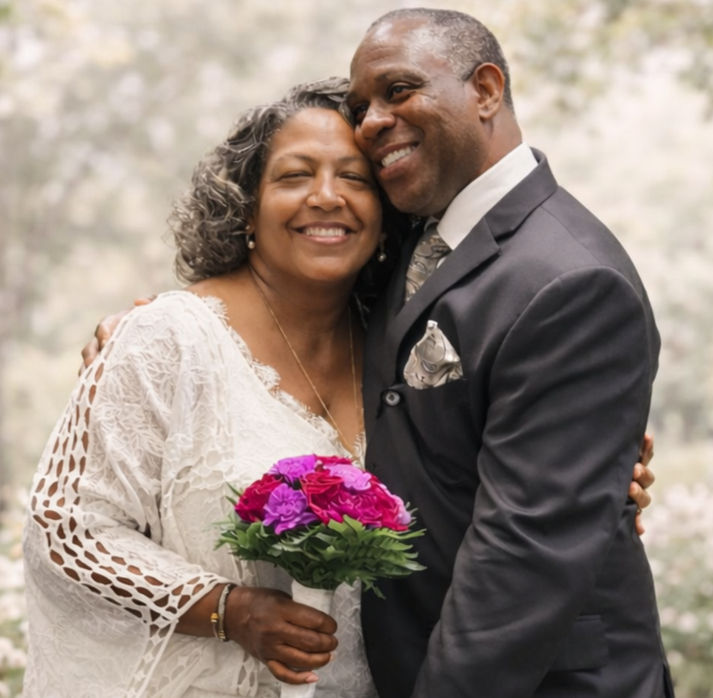
Brother Keith shared openly that both his former wife and his current wife are not registered members of the Nation of Islam—yet he also made something clear: respect can carry a household a long way.
His current wife, married in May, is supportive and active in helping him fulfill his responsibilities—assisting with Saviours’ Day efforts, supporting the mission, and standing beside him with sincerity.

He also reflected deeply on his oldest daughter—now 23—and the blessing of her character. She may not be registered, he said, but her discipline speaks loudly: no street life, no partying, no substances, no reckless behavior. A young woman with boundaries.
That realization gave him peace:
“She may not be in the Mosque,” he told us, “but the Mosque is in her.”
Entrepreneurship: Betting on Himself and Refusing the “Glass Ceiling”

One of the strongest themes in Brother Keith’s story is self-determination.
After coming home, he learned the moving business through brothers who gave him opportunity. One brother, Charles, became a key part of that beginning—allowing him to work, grow, and eventually step into a contract opportunity that became a launchpad.
Brother Keith said he didn’t want to live under a “glass ceiling.” He didn’t like being told when to come in, when to leave, and how much he was allowed to make. To him, entrepreneurship is faith in action.
“Entrepreneurs do what they do,” he said, “and they hire people to help them flourish. It’s the same principle—some are bigger, some are smaller.”
Today his company is called: MAKKS Movers M for Maddie (his mother), A for Adora (his youngest daughter), K for Kristen (his oldest daughter), and K for Keith.
That name tells you everything: family, purpose, and legacy.
He explained that the work requires discipline—sometimes long hours, sometimes 5–7 days a week, no paid sick days, no guaranteed check. But the reward is freedom, dignity, and the ability to provide.
And Brother Keith lives by a code that defines his business reputation:
“Before time is on time. When you’re on time, you’re late. And to be late is unacceptable.”
Saviours’ Day: What It Means and Why It Matters

Brother Keith described Saviours’ Day as a sacred annual celebration of the birth of Master Fard Muhammad, the Founder of the Nation of Islam. He explained that it is a time of gathering, learning, unity, and renewal—a convention atmosphere where the teachings are shared on identity, discipline, the time we live in, and how a people can save themselves through submission to divine guidance.
Brother Keith’s Closing Message: “All Things Are Possible”
As we closed, we asked Brother Keith what he’d want readers to take from his story—especially young men and women.
His message was simple, but it carried weight: “All things are possible.”
He spoke about challenges after release—parole pressure, constant reporting requirements, obstacles that could’ve broken his will. He said he endured because he had brothers who understood what he was carrying and helped him push through.
And he offered a final reflection that made us pause: He once told his mother he’d never do moving work—then later, that became his livelihood. Life has a way of humbling us, shaping us, and revealing what we’re truly capable of.
His conclusion was not polished—it was real: If you put your mind to something, you can do it. But you must be ready to overcome the challenges that will test you the moment you try to do right in a world that rewards wrong.
BLXCR Closing
We thank Brother Keith 9X for his transparency, his testimony, and his time. His story is not just about transformation—it’s about what happens when a man chooses discipline over desire, order over chaos, faith over fear, and purpose over ego.
And to our readers: may this interview serve as a reminder that the past doesn’t have the final word—God does.


Comments